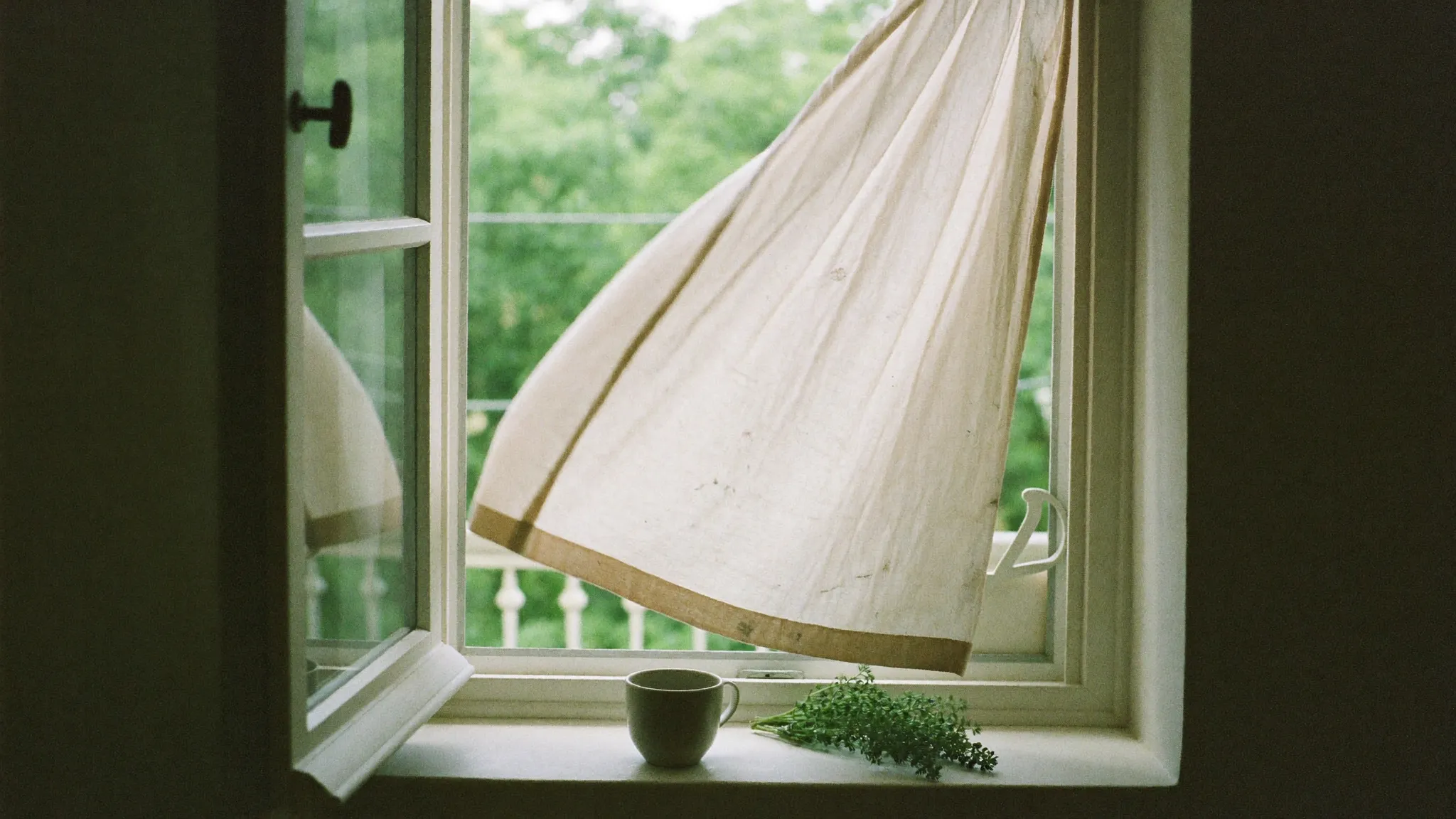
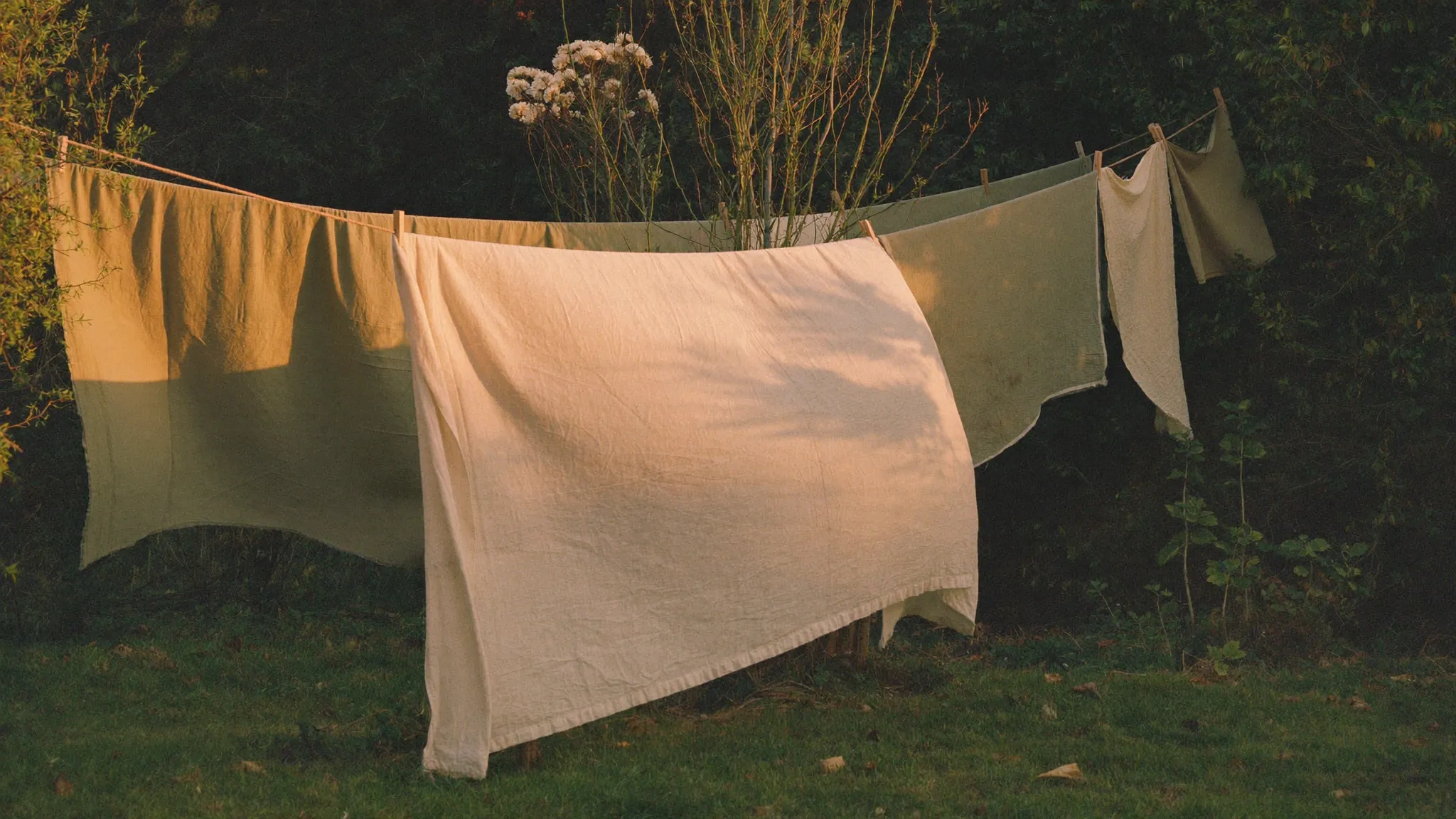
My grandmother had a rule she never spoke aloud, which is the strongest kind of rule. Sheets went out on the line before nine and came in before the dew returned. Between those hours the house waited. It did not do anything else while it waited. The waiting was the doing.
I think about this now that I live somewhere with a dryer the size of a small planet, a machine that promises to compress a whole afternoon into forty minutes and a chime. I use it in winter. The rest of the year I have gone back to the rope and the two wooden posts, and I have found that the rope is not really about the sheets at all.
What the line asks of you
A clothesline asks you to read the sky. Not forecast it on a screen, read it, the way you read a face across a room. Is that cloud carrying anything. Is the wind the kind that dries or the kind that only rearranges. You learn to know your own small patch of weather, its habits and its lies, and this knowing is a quiet form of belonging. You cannot line-dry linen in a place you have not paid attention to.
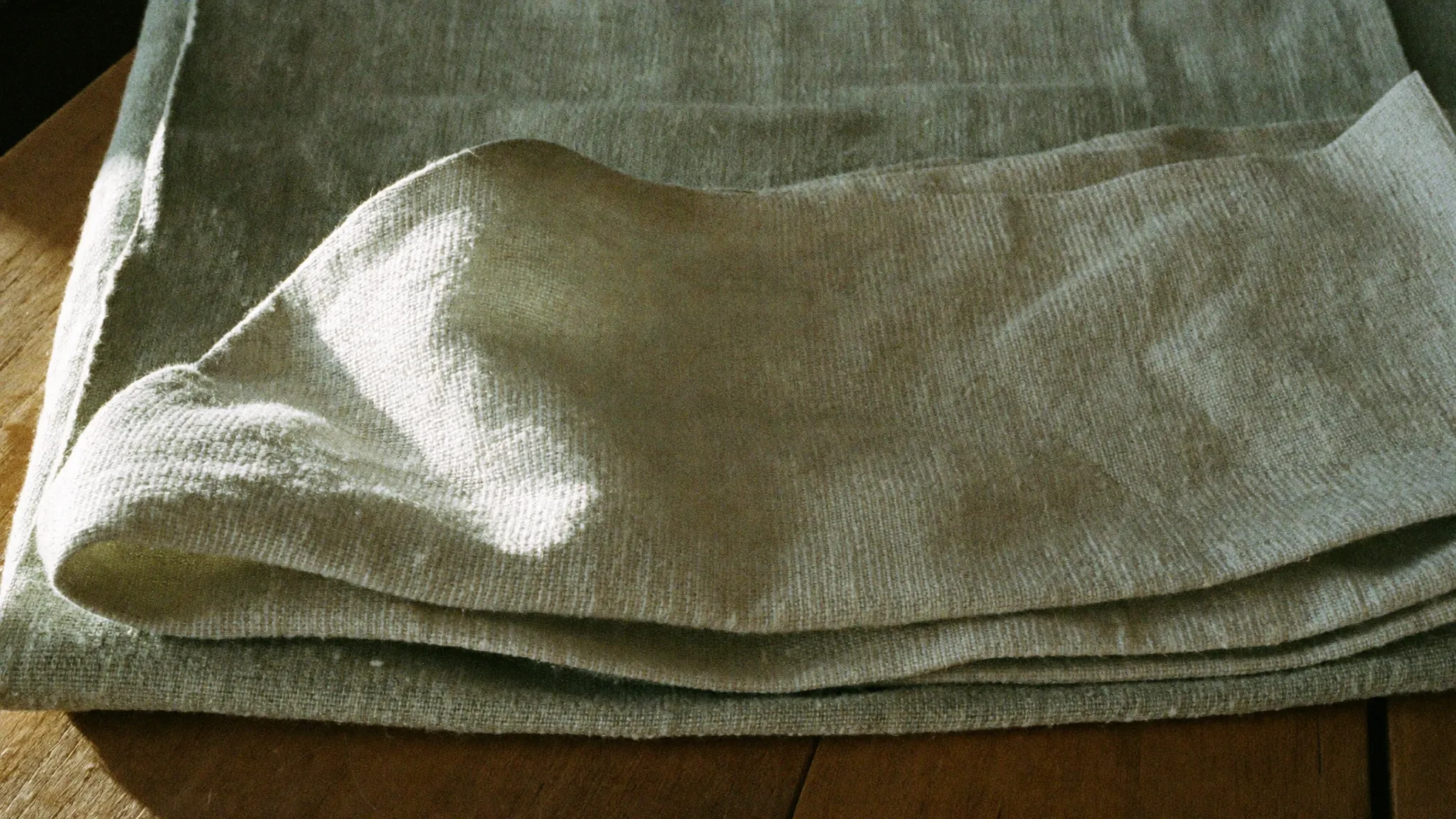
The fabric comes back changed. Everyone talks about the smell, and the smell is real, though I have never found a word for it that isn't borrowed, it is not clean exactly, it is more like the memory of clean. What no one mentions is the stiffness. Line-dried linen holds a little architecture at first, a crispness in the fold, and it softens over the evening as you sleep into it. You break in your own bed. The sheet learns you back.
A home that dries slowly is a home that admits it is not in charge of everything.
The argument against speed
There is a version of this essay that would tell you line-drying is better, more sustainable, more virtuous, and I want to be careful there, because virtue is a heavy thing to hang on a bedsheet. I am not interested in whether you are good. I am interested in whether you are here.
The dryer removes a decision from your day and I understand why that is a gift. But it also removes a small negotiation with the world outside the window, and I have come to think we are running low on those. So much of the house now runs on our behalf, silently, in the walls. The thermostat holds a number. The dishwasher chooses its own cycle. We have engineered the home into a kind of butler that never asks us anything, and then we wonder why the rooms feel like waiting rooms.
Linen on a line puts one question back. It says, will you be around this afternoon. And some afternoons the honest answer is no, and the sheets stay in the basket, and that is fine, the line does not keep score. But on the afternoons you say yes, the whole shape of the day bends gently around it. You stay closer to home. You glance out more. You bring the washing in at dusk with your arms full and warm, and for a moment you are holding the entire day, sun and wind and hours, folded into cloth.
The bringing-in
My favorite part was always the bringing-in, and it still is. The light has gone amber by then. The garden has that end-of-day hush where even the birds sound like they are lowering their voices. You unpin, and the pins go in your mouth or your pocket, and the fabric is cool now at the edges and still holding warmth in the folds, the way a person does.
You carry it inside. You make the bed you will lie in. The whole ritual has taken a day to accomplish nothing that a machine could not have done faster, and this is exactly the point I am trying, slowly, to make. Some things are not worth speeding up. Some things are the afternoon itself, wearing the disguise of a chore.
Put the phone down. Read the sky. Let the house dry slowly. It knows how.
Blackbird Hollow is a slow-living magazine. Nothing here is medical or health advice — we write about atmosphere, craft, and living well, not treatment.