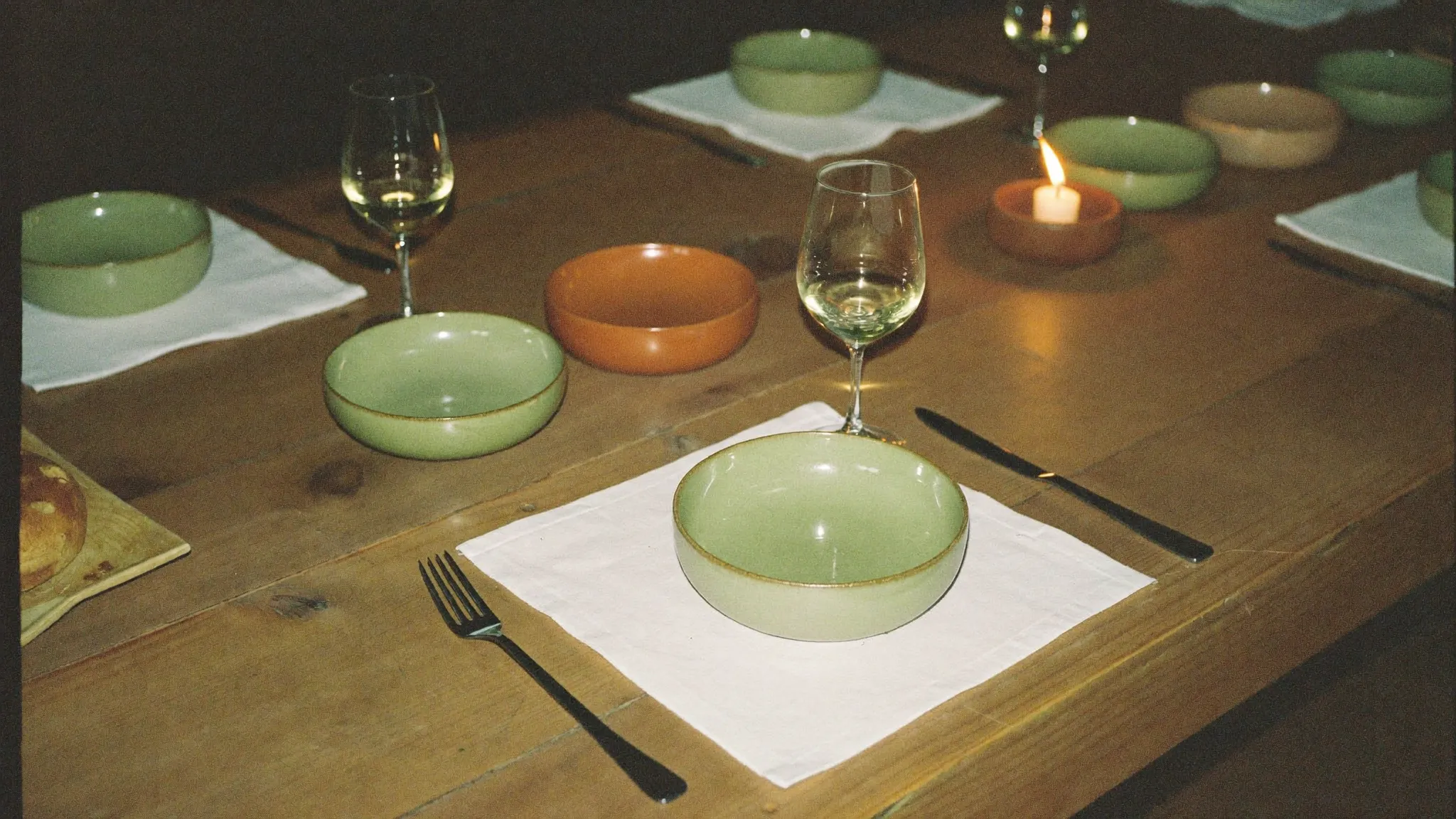
There are two ways to set a table and they produce two different evenings.
The first is setting a table for eating. It is efficient and there is nothing wrong with it. Plates, forks, the food, and then the clearing, the whole thing shaped like a task with a beginning and a clean end. Most nights, honestly, this is my table. Weeknights have their own dignity and it is not a dignity of lingering.
But the second kind of table, the one set for staying, is a different object entirely, and it took me years to understand that the difference is not in the food. It is in the intention laid down before anyone sits.
The candle changes everything
A table set for lingering has a candle on it, low, the kind you can see over. This is the smallest change and the largest. A candle is a promise about time. It says, out loud, in the language of wax, that this is going to take a while. Nobody lights a candle for a meal they intend to finish quickly. The flame is a commitment.
And it does its slow work all evening, burning down at its own indifferent pace, marking the hours in a way a clock never could because it does not judge them. You cannot rush a candle either. It gives its light for exactly as long as it gives it, and when it gutters you notice, together, that a great deal of time has passed and none of it was wasted.
A candle is a clock that does not make you feel late.
Bowls, not plates
I have come to prefer bowls for these evenings, and not for any reason a food writer would approve. A bowl slows the eating. It holds warmth longer. It asks you to lean in slightly, to gather, and this small posture of gathering does something to the mood of the whole table, rounds it, softens the edges of the meal.
The ceramics matter here, and I say this as someone suspicious of caring too much about objects. But a heavy handmade bowl in your hands is a different experience than a light machine-made one, and the difference is felt below the level of thought. The weight tells the body to settle. The slight irregularity of the glaze catches the candlelight unpredictably. You are, without deciding to, paying attention. And attention is the entire currency of a table set for lingering. It is the thing you are actually serving.
The long tail of the meal
The best part of a lingering table is the part after the food, the long tail, when the plates are pushed back a little and nobody has moved to clear them. This is where the real evening lives. The conversation loosens. Someone tells the story they wouldn't have told over the efficient version. The candle is lower now. If there is a good bottle of wine at the table it belongs here, in this unhurried after-part, something to be shared slowly among people who have already decided to stay, part of the softening rather than the point of it.
Nobody is performing. Nobody is checking a phone, because a phone at a lingering table feels like a small betrayal, a door left open to a colder room. The whole point is that you have closed that door. You are here, at this table, with these people, in this light, and the world outside has agreed to wait until morning.
Leaving it a while
The dishes will be there tomorrow. I have made my peace with this. A table left overnight, candle guttered, napkins soft and used, is not a failure of housekeeping. It is the visible record of an evening that mattered enough not to be tidied away.
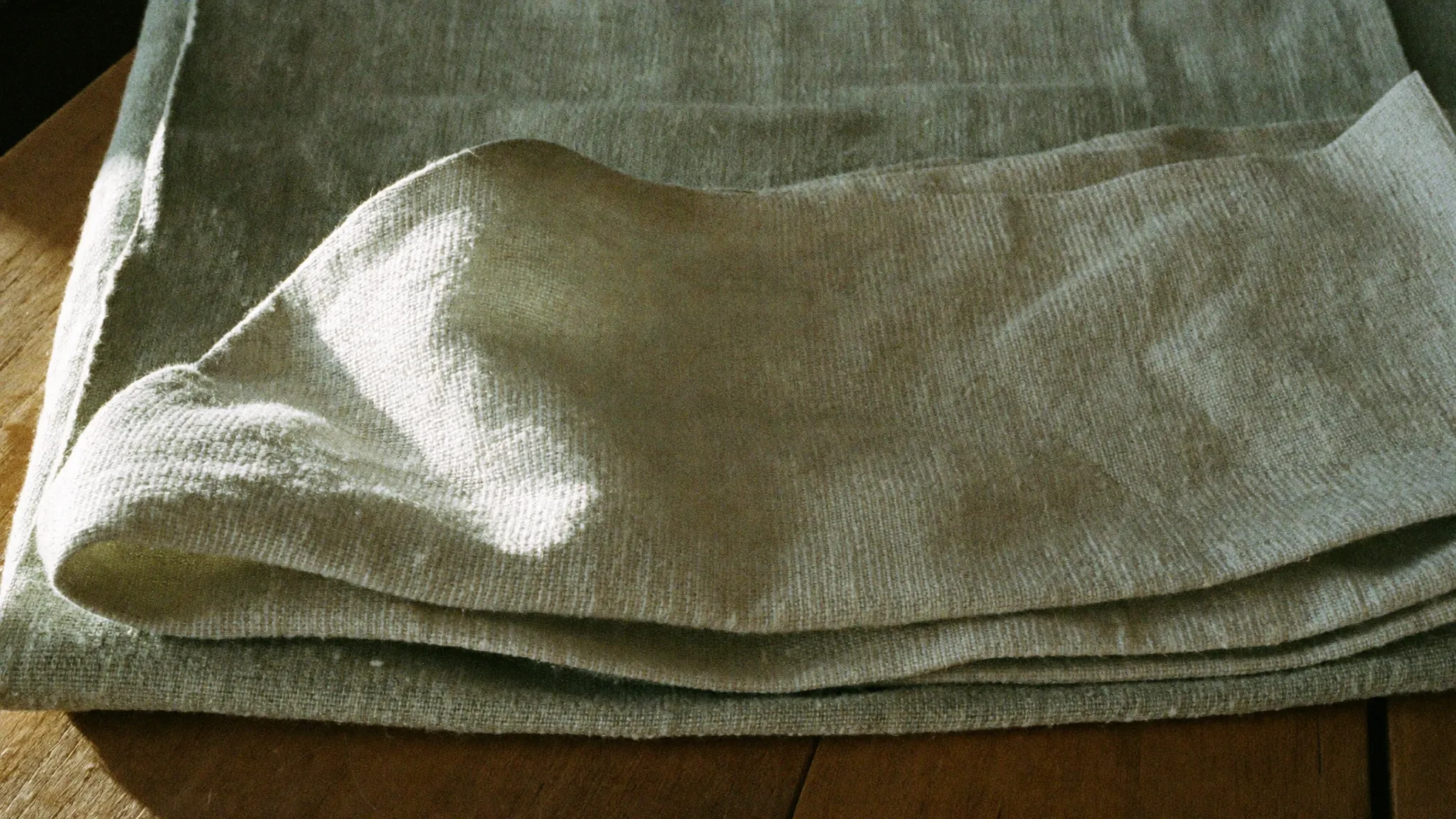
I come down in the morning and the light is different and the table holds the ghost of the night before, and I clear it slowly, in no hurry, the way it was set. Then I fold the linen and put the bowls away and the table becomes, again, a place for weeknights. Until the next time I light the candle and make it a promise.
Blackbird Hollow is a slow-living magazine. Nothing here is medical or health advice — we write about atmosphere, craft, and living well, not treatment.