You cannot rush a kiln. This is not a philosophy. It is physics. But the potter I spent an afternoon with has built a whole way of working, and arguably a whole way of living, on the difference between accepting that fact and resenting it.
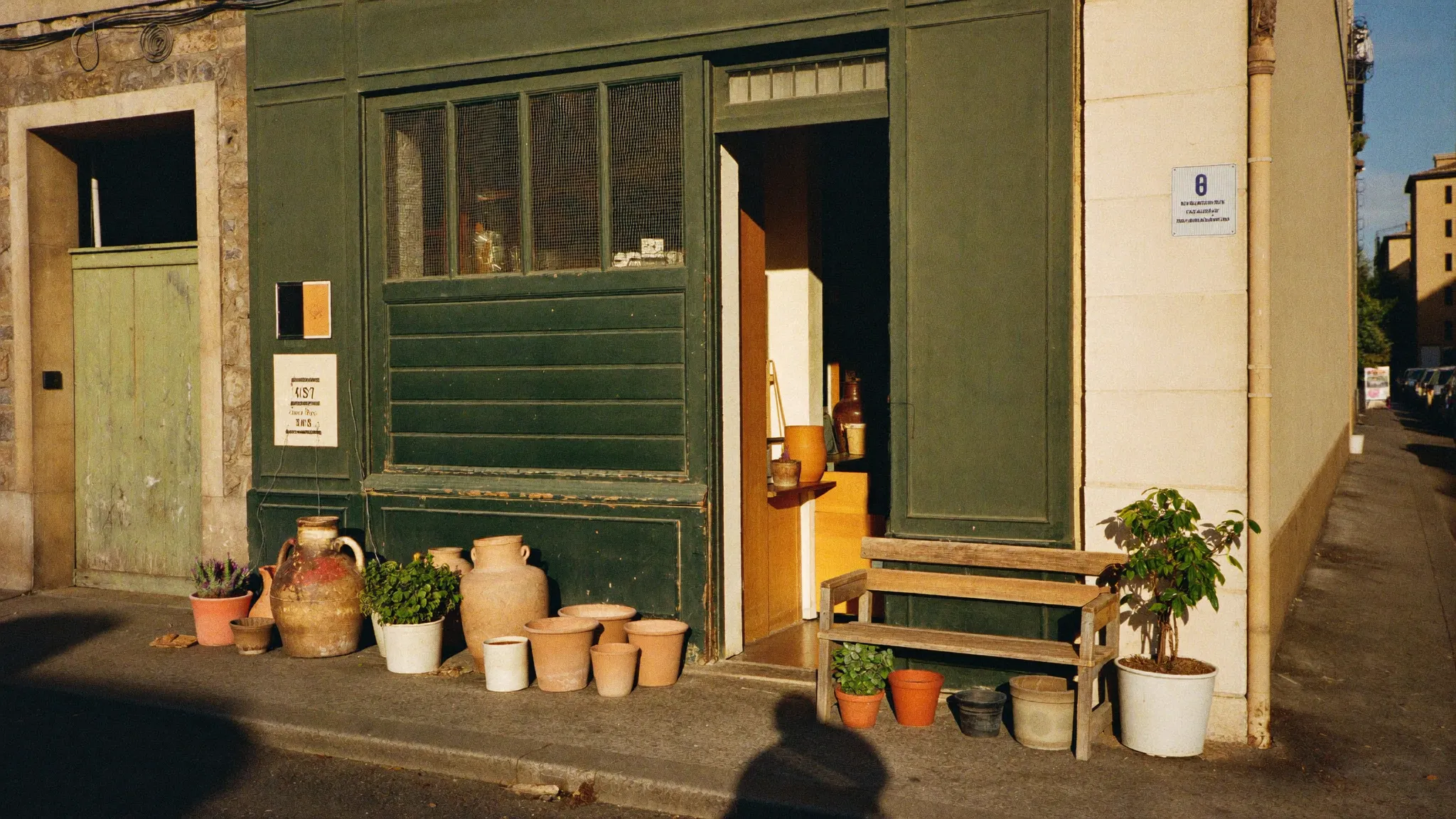
The studio is at the end of a lane, in a building that was once something agricultural, you can tell by the width of the doors. Inside it smells of wet earth and something mineral underneath, the smell of the clay itself, which she says you stop noticing after the first year and then miss terribly on holiday.
The tyranny of the schedule
"Everyone wants to know how long," she told me, not unkindly, as she trimmed the foot of a bowl with a small hooked tool. "How long until it's ready. And I understand it. But the question has the wrong shape."
The wrong shape, as she explained it over the next hour, is the assumption that the time between making and finishing is empty time, dead time, a delay to be minimized. In her studio it is the opposite. The clay must dry at its own pace or it cracks. Rush it and you lose it. The kiln must cool at its own pace or the glaze crazes and the piece shatters. The waiting is not an obstacle to the craft. The waiting is a material the craft is made of, as real as the clay.
"I don't make pots," she said. "I make conditions, and then I wait for the pots to happen."
What the wait does to a person
I have interviewed a lot of makers, and there is often a restlessness in them, a foot tapping toward the next thing. She did not have it. When she finished trimming the bowl she did not immediately reach for another. She sat back. She looked at it. She turned it in the raking afternoon light coming through the high windows, checking the line of it, and she took a length of time doing this that would have made a more efficient person twitch.
This, I came to understand, is what a life built around cooling kilns does to a person. It uninstalls the twitch. When you cannot make the central process go faster, you stop trying to make anything go faster, and a different tempo takes over. She moves through her day the way the clay moves through its stages, deliberately, without lurching, each thing given the time it actually requires rather than the time we wish it took.
The shelf of the almost-finished
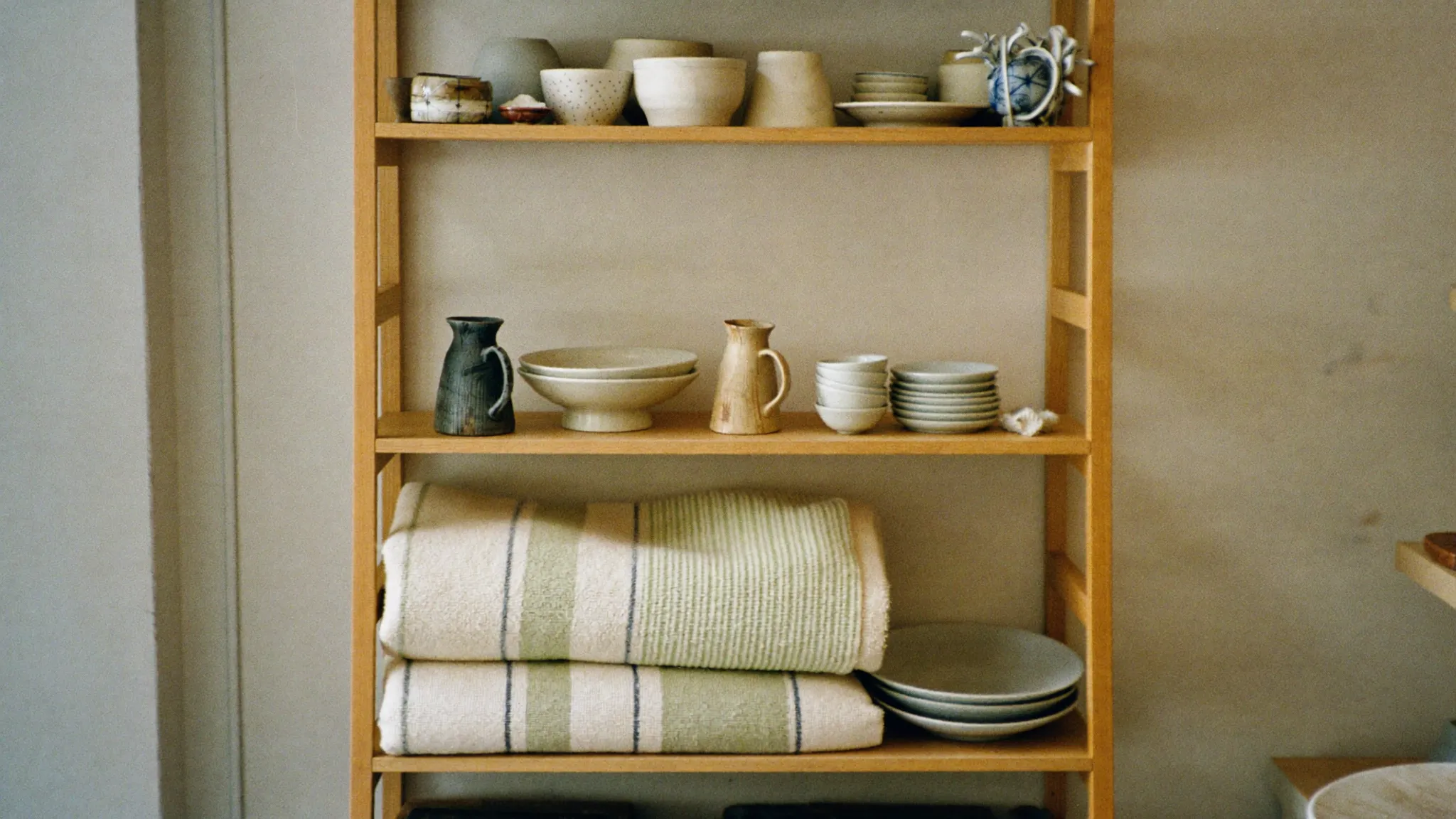
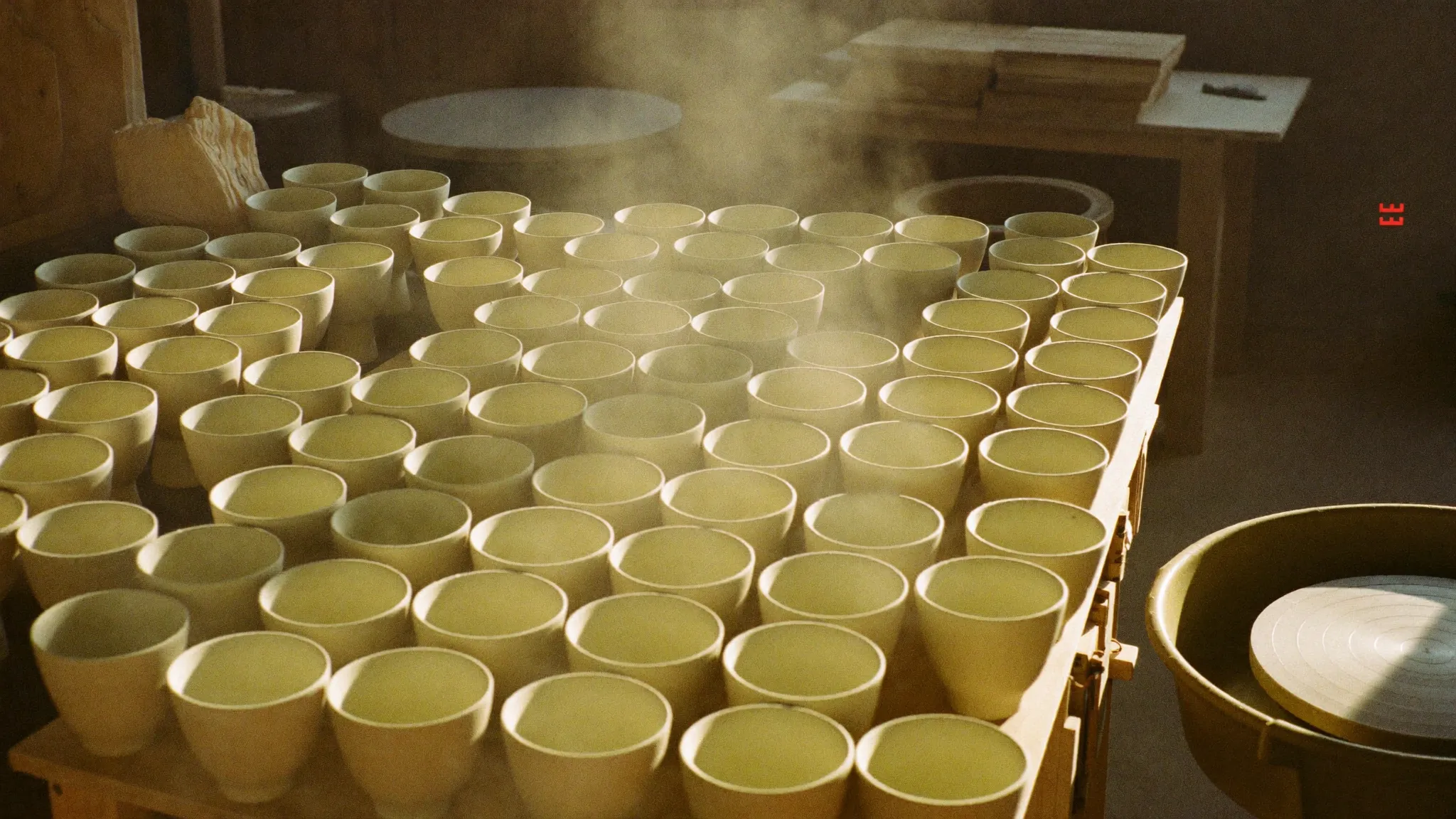
Along one wall runs a shelf of bisque-fired cups, pale and matte and unglazed, waiting for their second firing. They have a particular beauty in this in-between state, chalky and soft-looking, though they are already hard. She calls it the almost. "People never see the almost," she said. "They see the raw clay, romantic, and they see the finished glaze, shiny. The almost is the longest stage and nobody photographs it."
She is fond of the almost. It is the honest middle of things, the part that gets edited out of every story about making, where nothing dramatic is happening and everything necessary is. The cups sit on the shelf being not-yet, and she lets them, and there is no anxiety in the letting.
Leaving slowly
I stayed longer than I meant to. The light moved across the floor while we talked and the unglazed cups changed color slightly as it did, warming and cooling with the sun. When I finally stood to go she was loading the kiln, placing each piece with the care of someone tucking in a child, and she told me it would fire overnight and cool for a full day after that.
"So the day after tomorrow," I said, doing the math, the old twitch showing.
"The day after tomorrow," she agreed, closing the kiln. "Or whenever it's cool. The kiln will tell me. It always does."
I walked back up the lane in the gold of the late afternoon, having watched, essentially, a person refuse to hurry for four hours, and having found it, to my own surprise, restful in a way I could still feel on the drive home.
Blackbird Hollow is a slow-living magazine. Nothing here is medical or health advice — we write about atmosphere, craft, and living well, not treatment.