Putting Up July.
On canning in the hottest kitchen of the year — the glut, the steam, and a shelf that remembers summer in the middle of winter.
 By Ana · July 19, 2026 · 6 min read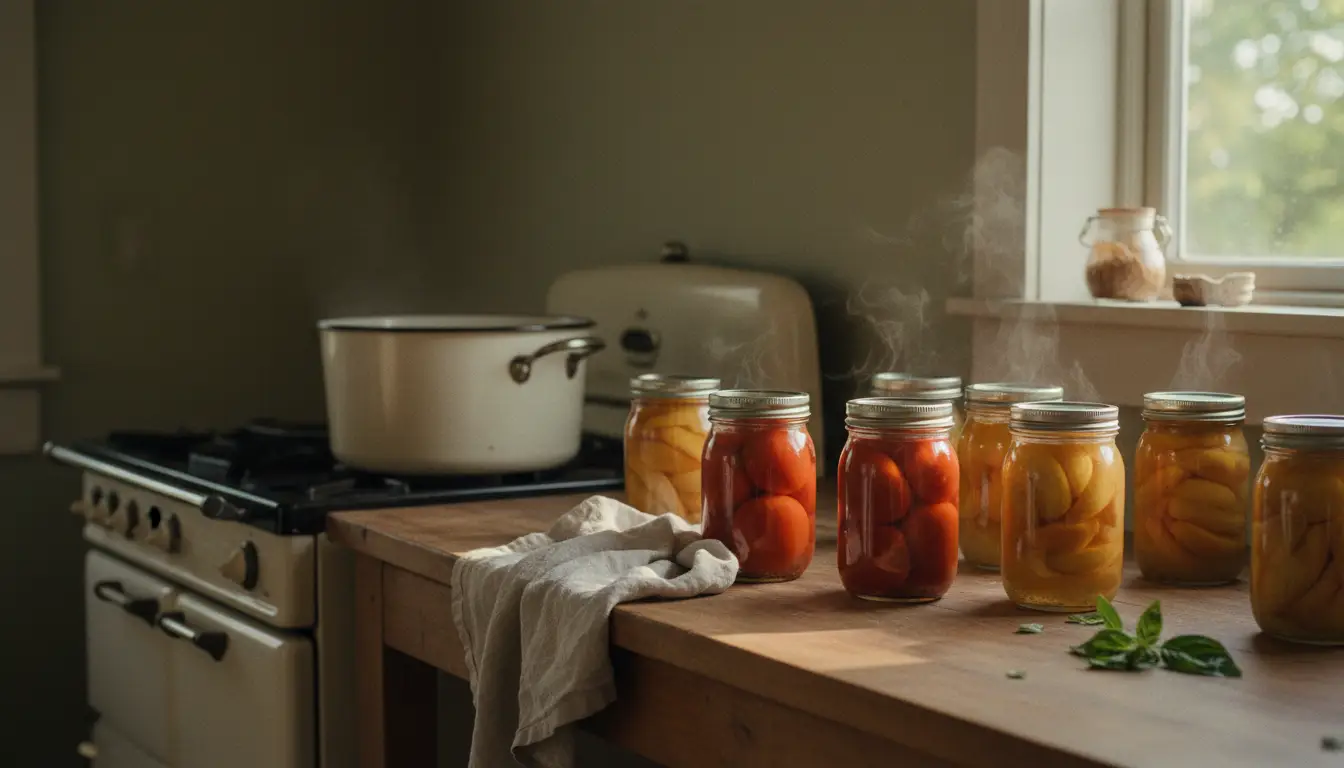
The garden is polite in June.
It hands you things one at a time — a bowl of strawberries, a fistful of basil, enough beans for one dinner if you pad them out. You can keep up with June.
July doesn't hand you anything. July backs up to the kitchen door and dumps the load. The tomatoes come all at once, more every morning, ripening faster than any reasonable household can eat them, and you have maybe a week to decide what kind of person you are: the kind who watches them go soft on the counter, or the kind who gets the big pot out.
I get the pot out. Not gracefully. But I get it out.
The Glut
Here is the joke built into canning, and nobody warns you: the work arrives in the exact week you least want to do it. A water-bath canner is a stock pot the size of a bass drum holding two gallons of rolling boil, and it runs for hours, in your kitchen, in the hottest stretch of the year. The windows fog. Your shirt sticks. The linen-apron version of this does not exist. There is no way to look serene while blanching forty tomatoes; there is only the steam and the timer and your own two hands going slowly stained and smelling like the inside of summer.
And I've come to think the misery is quietly part of it. So much of a slow life can be arranged to be pleasant — the walk, the coffee, the candle at the end of the day. This one can't. This one costs you a sweaty afternoon, paid in full, up front. That's not a flaw in the arrangement. That's the arrangement.
The Rules
Most of what I write about is forgiving. Kill the basil, start over. Burn the loaf, it's still bread. Canning is the one practice in my year that is not casual, and I've learned to love it for that too.
The jars get properly cleaned. The lids are new, every time. The recipe comes from a tested source — a real one, an extension office or a canning book with a spine broken from use — and you follow it like it's a law, because it sort of is. You don't freelance the acid. You don't shave the processing time because the kitchen is hot and you're tired. The rules are few and old and completely non-negotiable, and there is an odd relief in that. For one afternoon a year, I don't have to decide anything. Somebody's grandmother already decided, and she was right, and all I have to do is what she said.
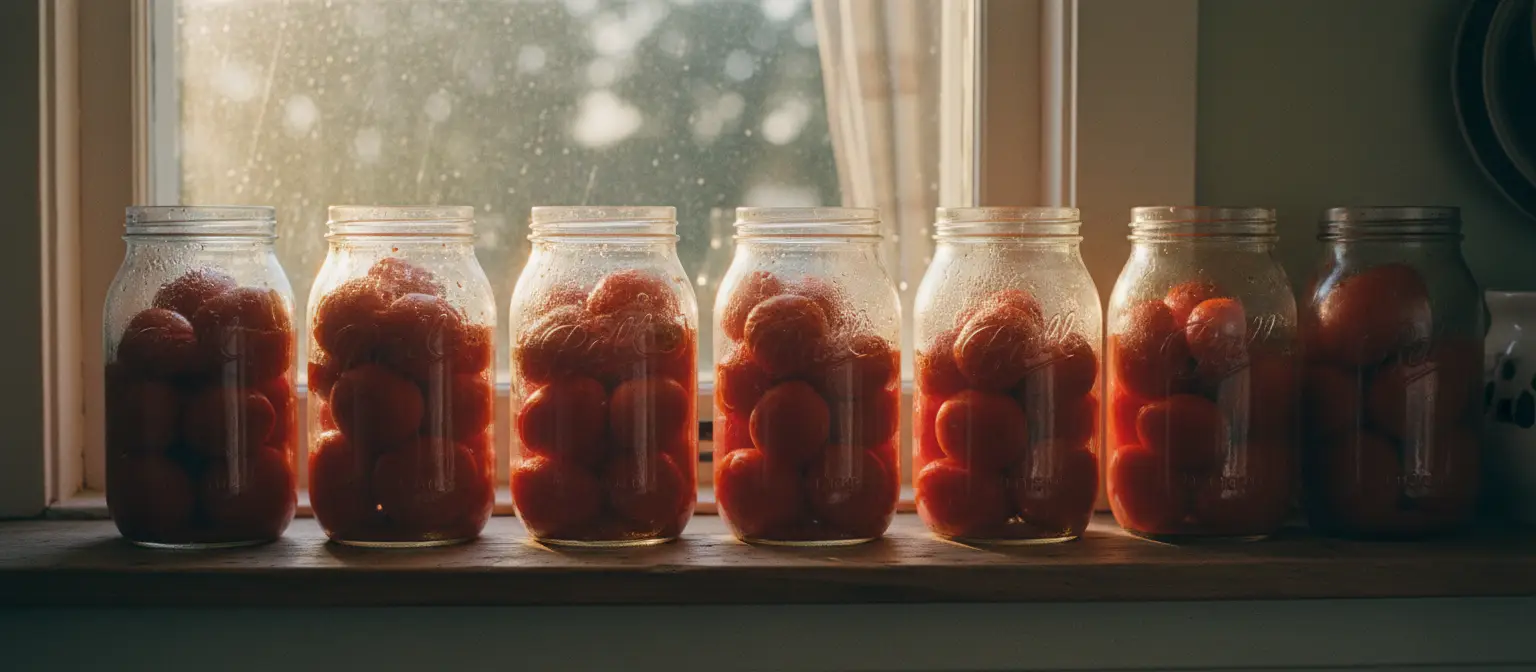
By evening the counter is lined with quarts, late light coming through them like stained glass nobody planned. And then the part I will never get tired of: the pings. As the jars cool, the lids pull down and seal, one at a time, each with a small bright ping — the sound of a thing closing properly. You're somewhere else by then, folding laundry, half-listening, and the kitchen just quietly announces, one jar at a time, that the work held.
“The jar in February is worth exactly what the afternoon in July cost. That's not a flaw in the arrangement. That's the arrangement.”
The Shelf
The real payoff is six months out, and that's the whole point of it.
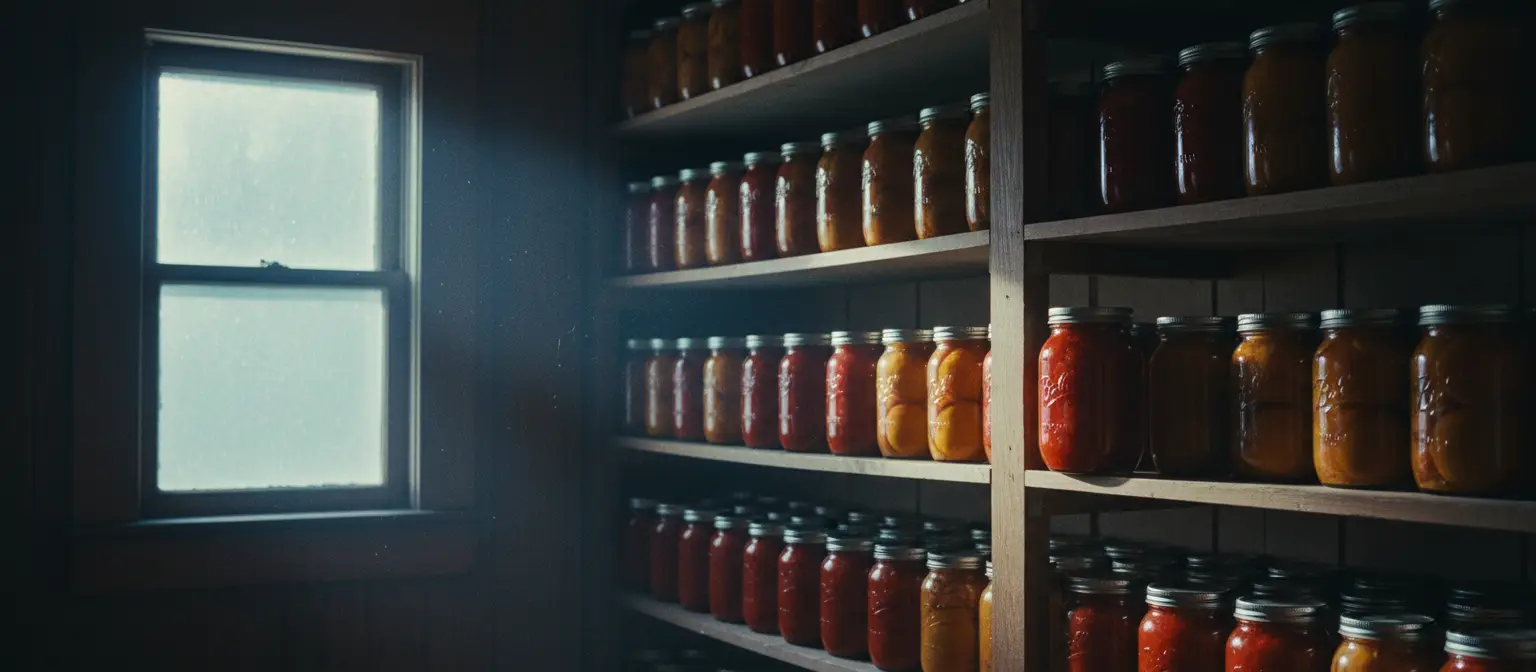
There is a particular kind of evening in February — dark at five, everything outside the color of wet cardboard — when you go to the shelf and take down July. Open a quart of tomatoes you put up in the heat and the whole thing comes back: the glut, the steam, the pings on the counter. It tastes embarrassingly better than anything from the store, but honestly the flavor is only half of it. The other half is that past-you did this for present-you. A jar is a letter you mail six months forward, and winter is when it gets delivered.
I don't can everything. I'm not building a bunker. A couple dozen quarts of tomatoes, some peaches if the market is kind, a shelf's worth — enough that the season doesn't just end, it gets kept. That's the word the old-timers used, and it's the right one. Keeping. Not hoarding, not preserving-as-performance. Just refusing to let the best month of the garden disappear entirely into the compost and the past.
Six jars is a first year
A borrowed pot, a tested recipe, one Saturday you were probably going to waste anyway. Six jars. That's a first year.
The house will be too hot, the floor will be sticky, and some evening deep in the winter you will open the first one and understand, all at once, why every generation before us did this without being asked.
July is loud and it doesn't last. Put some of it where winter can't get it.
Blackbird Hollow is a slow-living magazine. Nothing here is medical or health advice — we write about atmosphere, craft, and living well, not treatment. For canning, always follow a current tested recipe from a trusted source.