A Field Guide to Slow Living
Ten practices for a life you actually live in. Not the pretty version — the real one.
 By Ana · Rituals · 9 min read
Slow living gets sold to you wrong.
You've seen the version — the spotless farmhouse, the linen apron that never catches a stain, the woman who apparently wakes up already glowing. It's pretty. It's also a lie, and it's the exact opposite of the point. That version is just one more thing to perform, one more bar to clear, one more way to feel behind.
This isn't that.
Slow living, the real kind, is small and unglamorous and mostly invisible. It's guarding the parts of your day that are actually yours. It's doing one thing at a time and letting it take the time it takes. It's not about doing more by hand — it's about being present for the handful of things you already do.
What follows is ten practices. You don't need all of them. Pick one, do it badly, keep going. But if you're going to start somewhere, start at the top — the whole day is easier when you win the first hour.
The First Hour
I used to reach for my phone before I reached for the light. Hand already moving across the nightstand, the whole day pouring in before I'd taken a full breath in it — notifications, weather, somebody's opinion about something that happened while I slept. Twenty minutes into everyone else's morning before I'd had a single minute of my own. That's not waking up. That's getting ambushed.
So I started guarding one hour. The first one.
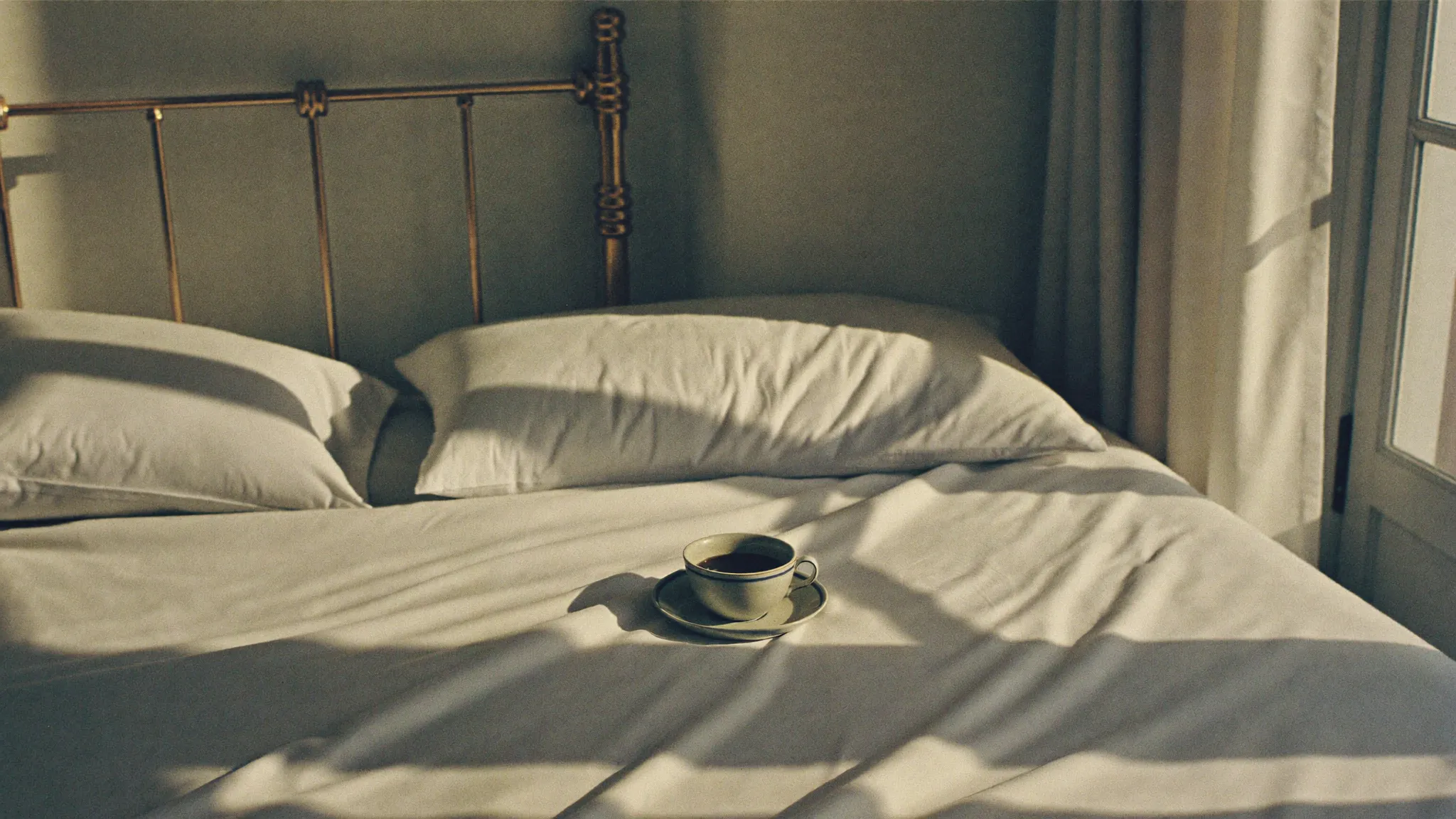
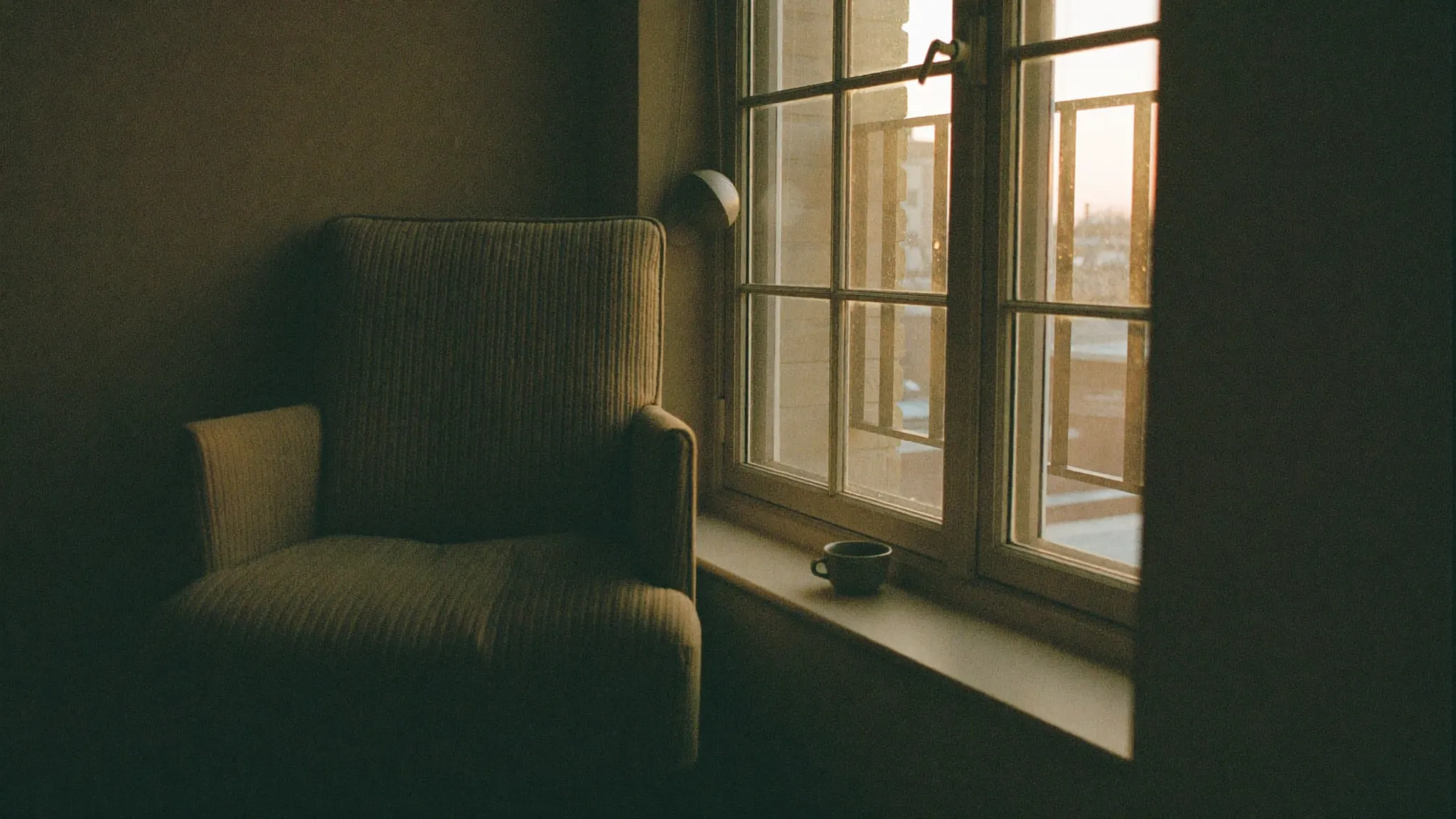
It looks like this: I leave the phone where it is — that's the whole discipline, and it's harder than it sounds. I open a window and let in the real air, the actual temperature of the day, not the number an app gives me. I make coffee slow, on purpose, because standing there while it happens gives my hands something to do that isn't holding a screen. Then I sit with it by the window and a notebook, and I put down whatever's on top. Some mornings nothing, and I just watch the light come up over the field.
The day feels longer after. Not literally — but I owned the front of it instead of handing it away. The emails still wait. Turns out the world's been turning without my immediate attention the whole time.
The Jar Garden
You don't need land. You need a windowsill and the willingness to kill a few plants before you get the hang of it.
I keep herbs in jars above the kitchen sink — basil, mint, whatever's cheap and forgiving. Not for the aesthetic, though they look good in the morning light. For the small daily proof that something's alive and growing because I tended it. You water them. You turn them toward the sun. You pinch off what you need for dinner. It's the shortest possible loop between caring for a thing and being fed by it.
And here's the honest part: the first round probably dies. Mine did. You overwater, or you forget for a week, or the light's wrong. Doesn't matter. It's basil, not a mortgage. You start again, and the second round teaches you what the first one couldn't.
The Mending Basket
There's a basket by my chair with the things that need fixing. A shirt missing a button. Jeans gone thin at the knee. A sock — one sock, always one sock.
I used to throw these out. A button pops, the shirt's done, buy another. That's the reflex the whole world trains into you. But something happens when you sit down with a needle and put a thing back into service with your own hands. The shirt stops being disposable. It becomes something you kept. And the mend shows — I don't hide it, I let the stitches be seen — which somehow makes it more mine, not less.
It's ten minutes. It's genuinely calming in a way I can't fully explain. And it's a quiet no to a world that wants everything you own to be replaceable, you included.
The Laundry Line
I know how this sounds. Laundry as a practice. Stay with me.
There's a stretch of line out back, and on a decent day I hang the wash instead of feeding it to a machine. It takes longer. That's not a bug. Pinning wet cloth to a line in the open air is ten unhurried minutes outside with your hands busy and your mind free to wander, and it comes off smelling like nothing a dryer sheet has ever managed to fake.
Then the folding. Warm off the line, folded slowly, one piece at a time, put away with a little care. It's the least glamorous thing in this whole guide and it's the one that surprised me most. The ordinary made calm. A chore turned into a few minutes that belong to you.
Forage One Thing
Once you start looking, the ground is full of things you've been walking past your whole life.
I don't mean go deep into the woods and eat mystery berries. I mean learn one plant — really learn it, cold, so you'd know it anywhere. For most people that's something safe and everywhere: blackberries, dandelion, a wild mint. One plant a season. You learn what it looks like, where it grows, when it's ready, and how not to confuse it with anything else.
What it gives you isn't really the food. It's that the world stops being scenery. You walk the same path you always walked, and now it's got a pantry in it. That shift — from looking at the land to reading it — is worth more than the handful of berries.
The Salve
This is where the hemp comes in, and it comes in honest.
There's a jar in my cabinet I made myself — dried herbs steeped in oil for a few weeks, warmed, strained, set with a little beeswax, hemp in the mix for the calm it lends. Not to smoke, not to get anywhere. Just a balm for dry hands and rough days, made slow, from things I can name.
That's the whole appeal of making your own anything: you know exactly what's in it. No label you can't read, no ingredient you can't pronounce. Herbs, oil, wax, hands, and a few weeks of patience. It feels a little like alchemy the first time — plants and oil going into a jar and coming out as something that works.
Bread You Don't Babysit
Everyone thinks bread is hard. Bread is mostly waiting.
The no-knead loaf is four things — flour, water, salt, a pinch of yeast — stirred together in a bowl with a spoon and left alone overnight. No kneading, no machine, no technique to master. Time does the work while you sleep. In the morning you shape it, bake it in a hot covered pot, and pull out a loaf with a real crust that fills the whole house with the smell of it.
It costs almost nothing. It re-does itself as often as you want. And there's a particular quiet pride in setting a loaf on the table that you made from flour and water and patience — nothing else. It's the most you'll ever get back for the least you put in.
The Evening Wind-Down
If the first hour is how you meet the day, this is how you let it go.
Somewhere before bed I put the day away on purpose. Phone down early — that one again, always that one. A little tidy of the kitchen so the morning me isn't cleaning up after the tonight me. A candle, maybe. Tea I don't need but like holding. And the notebook comes back out — the same one from the morning — and I close the loop: what happened, what I'm setting down here so I don't carry it up the stairs.
The point isn't a routine for its own sake. It's a border. A line between the day and the rest. Without it, the day just bleeds into the night and into the next morning, and nothing ever really ends. Drawing the line lets the day be over. And a day that's actually over is a day you can rest after.
The Seasonal Reset
Not the frantic kind. Not the bin-bags-and-a-breakdown kind. The slow kind.
Every so often — the turn of a season is a good enough excuse — I clear one drawer. One. Not the house, not a room, not a whole weekend of decluttering that ends in exhaustion and regret. A single drawer, emptied out, wiped down, and filled back up with only what actually earns the space. What doesn't earn it leaves.
Doing it small is the whole trick. One drawer is finishable in the time you've got, and finishing feels good, and feeling good makes you do the next one next month instead of never. Slow decluttering isn't about a minimalist house. It's about living with things you chose on purpose, a little more of them each season.
Sit Still
I saved this for last because it's the one nobody wants and everybody needs.
Sit down, outside if you can, and do nothing. No phone. No book. No podcast in your ears turning even your rest into an input. Just sit — on the porch, on a step, on the ground — and let the ten minutes be genuinely empty.
It's uncomfortable at first. Your mind will claw for something to do. You'll feel like you're wasting time, because you've been taught that every minute has to produce something. Sit through that part. It passes. And on the other side of it is the thing all nine of the other practices are quietly pointing at: the ability to just be somewhere, in your own life, without needing it to be productive or pretty or posted.
That's the whole thing. That's slow living. Not the herbs or the bread or the mended shirt — those are just the doorways. This is the room they open into.
Start with the first hour
Ten practices. You won't do all of them, and you shouldn't try to — that's just the old life in a linen apron.
Pick one. Do it badly. Do it again. Let it be small and unglamorous and entirely yours. The point was never a perfect slow life for the camera. The point is a few honest minutes, scattered through an ordinary day, that belong to nobody but you.
Start with the first hour. The rest follows.
Blackbird Hollow is a slow-living magazine. Nothing here is medical or health advice — we write about atmosphere, craft, and living well, not treatment.