A Fall Porch, Gathered Not Bought.
Squash you'll eat in November, branches from the fence line, hydrangea dried on the stem, and the only two things worth buying. Fall porch decor from a woman who refuses the plastic aisle.
 By Ana · September 26, 2026 · 8 min read
Somewhere in America right now there's a foam pumpkin with a glitter stem sitting in a warehouse, waiting to go on a porch for six weeks and a landfill for six hundred years.
I don't say this to be a scold. I say it because I bought that pumpkin, more or less, for years. I'd buy a wire wreath with polyester leaves on it, a bag of plastic gourds, a scarecrow whose face got sadder every season. Every November I'd cram it all into a bin in the attic and every September I'd open the bin and wonder why none of it looked like fall.
Real fall is already out there and most of it is free. It's in the garden, at the market, and along the fence line. This porch is built from what I could gather, what I could eat afterward, and exactly two things I bought once and expect to keep for a very long time.
The Squash
Everything on this porch starts from one rule: a pumpkin on my steps is a pumpkin in my kitchen by Thanksgiving. So I stopped buying the big orange carving kind. They're technically edible, but they were bred to hold a candle and not to taste like anything. I buy the ones that were grown to be eaten, and those happen to be the most beautiful squash at the market anyway.
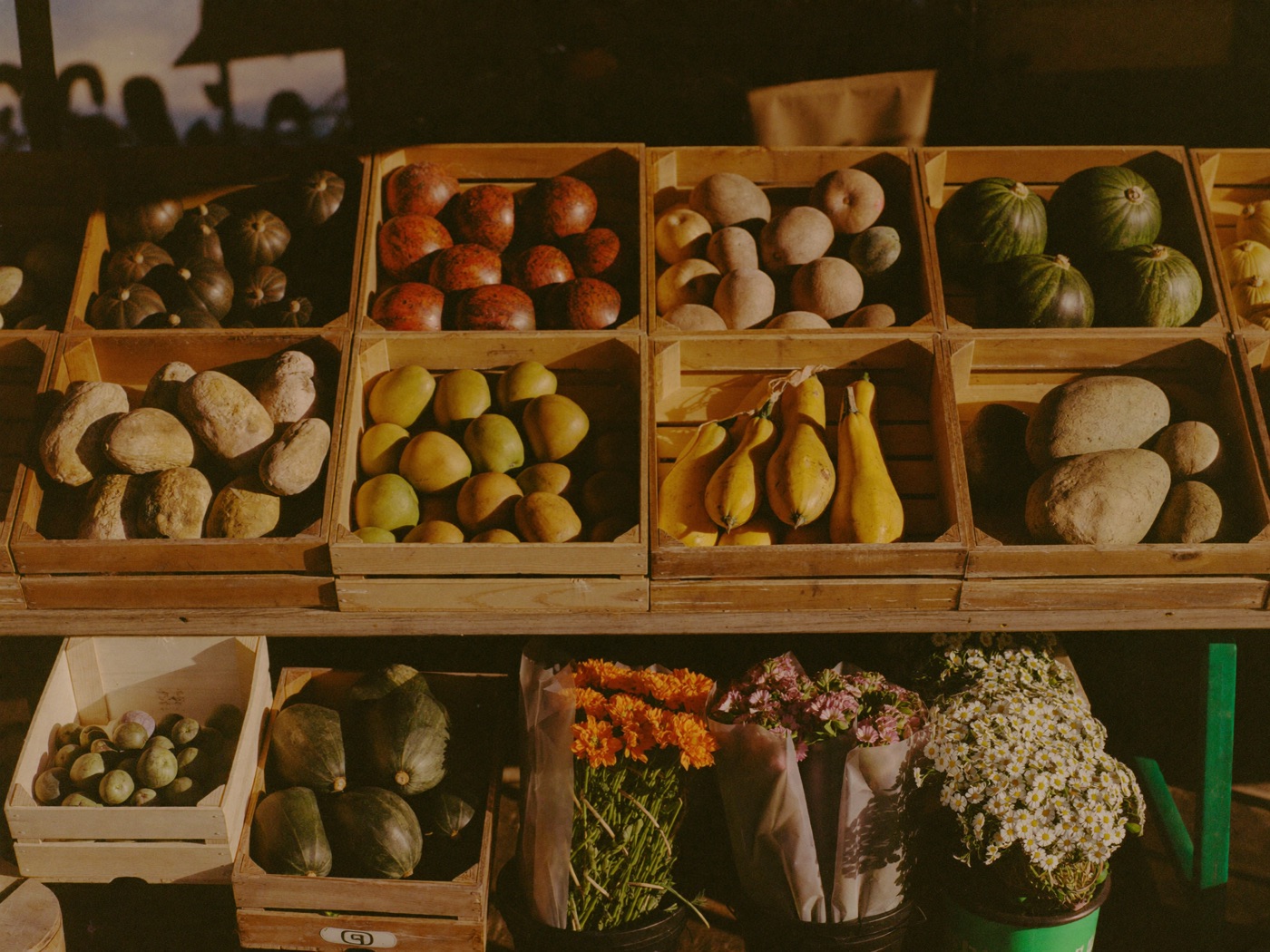
‘Long Island Cheese’, flat and buff-colored like a wheel of something aged, and the best pie pumpkin I know. ‘Jarrahdale’, which is a gray-blue that looks like it came off a slate roof. ‘Rouge vif d'Étampes’, the deep-ribbed red one everybody calls the Cinderella. Then a couple of butternuts, and if I can find them, a Seminole pumpkin or a pink banana ‘Candy Roaster’, both of them old Southern squash that were keeping families fed long before anybody put one on a porch for looks. Stack them in odd numbers, big ones at the bottom, on the steps and around a chair, and you're done. It looks like a harvest, because that's what it is.
A few things keep them eating-good for the six weeks or so they spend outside:
Don't carve the ones you mean to eat. Once a squash is cut it's on the clock. If the children need a jack-o'-lantern, and they do, buy one carving pumpkin for that job and compost it on November first.
Keep them off bare concrete. NC State's storage advice is to keep squash off the floor, or at least on something porous like wood or straw, because moisture trapped underneath rots them from the bottom. I set mine on a straw bale, an old board, or the doormat.
Carry them by the body, not the stem, and don't buy one whose stem has snapped off. The stem is its cork.
Bring them in before a frost, and know that the porch is aging them. The ideal for keeping winter squash is fifty-five degrees or so, and a sunny October porch in the South can be eighty. So the porch is a loan, not storage. When the first cold night comes, the squash come inside to a cool room, and then, one by one, to the oven.
The Branches
The second thing on the porch is whatever is growing near it. By the door I keep a big stoneware crock, heavy enough that the wind can't argue with it, and every week or so I walk the fence line with a pair of pruners and fill it.
In the South that means Southern magnolia above all. The leaves are glossy green on top and suede-brown underneath, and they dry right where you put them and stay handsome well past Christmas. Oak branches with the leaves still on, going bronze. American beautyberry, if you have it, for those unreal clusters of violet berries. Sweetgum for its stars. Tall grasses from the field edge. None of it needs water once it's cut for drying, and all of it goes to the brush pile when I'm done.
Two rules. First, cut from your own place, or ask whoever owns the land. Second, leave oriental bittersweet alone, however pretty the orange berries are. It's an invasive vine, and wreaths of it help spread it, because the birds carry the berries off to wherever you'd least want it.
The hydrangeas are where I really cheat, because they dry themselves. The trick is patience. Leave the blooms on the shrub until they start to go papery to the touch, usually around now. Then cut them with a good length of stem, strip the leaves, and stand them in a couple of inches of water somewhere warm and dim. Let the water evaporate on its own. As the heads dry, they fade from pink or blue to the antique greens, dusty rose, and parchment that no craft store has ever managed to copy. If you want the true color kept, you'll need silica gel, and I don't bother. The faded ones are the point.
A pruning note, so nobody loses next summer's flowers to a fall arrangement: bigleaf and oakleaf hydrangeas already have next year's blooms tucked into this year's wood, so take the flower head and a short stem, not the whole cane. Panicle hydrangeas flower on new growth, so you can cut those as long as you like.
Buy It Where It Grew.
The best porch squash come from the person who grew them, and that person can tell you which ones make the best pie. Nashville, Charleston, Savannah's Forsyth Park, Crescent City: the markets are full of them right now.
Farmers markets & nurseries in the Directory →“Every November I'd cram it all into a bin in the attic, and every September I'd open the bin and wonder why none of it looked like fall.”
Two Things, Bought Once
I'm not against buying things. I'm against buying things twice. Two pieces on this porch came from a store, I paid real money for both, and I expect to hand both of them down.
A coir doormat. Coir is the bristly fiber from coconut husks, and it's been scraping mud off boots for longer than there's been plastic to compete with it. A good one is thick and coarse, it goes a warm tobacco color as it weathers, and when it's worn out it can go on the compost pile. The catch is the backing. Plenty of coir mats are glued to a sheet of PVC, which makes them a plastic mat in disguise. Turn it over before you buy it. I keep a plain natural coir mat at the front door all year. In fall it gets a turn as the base for the squash stack.
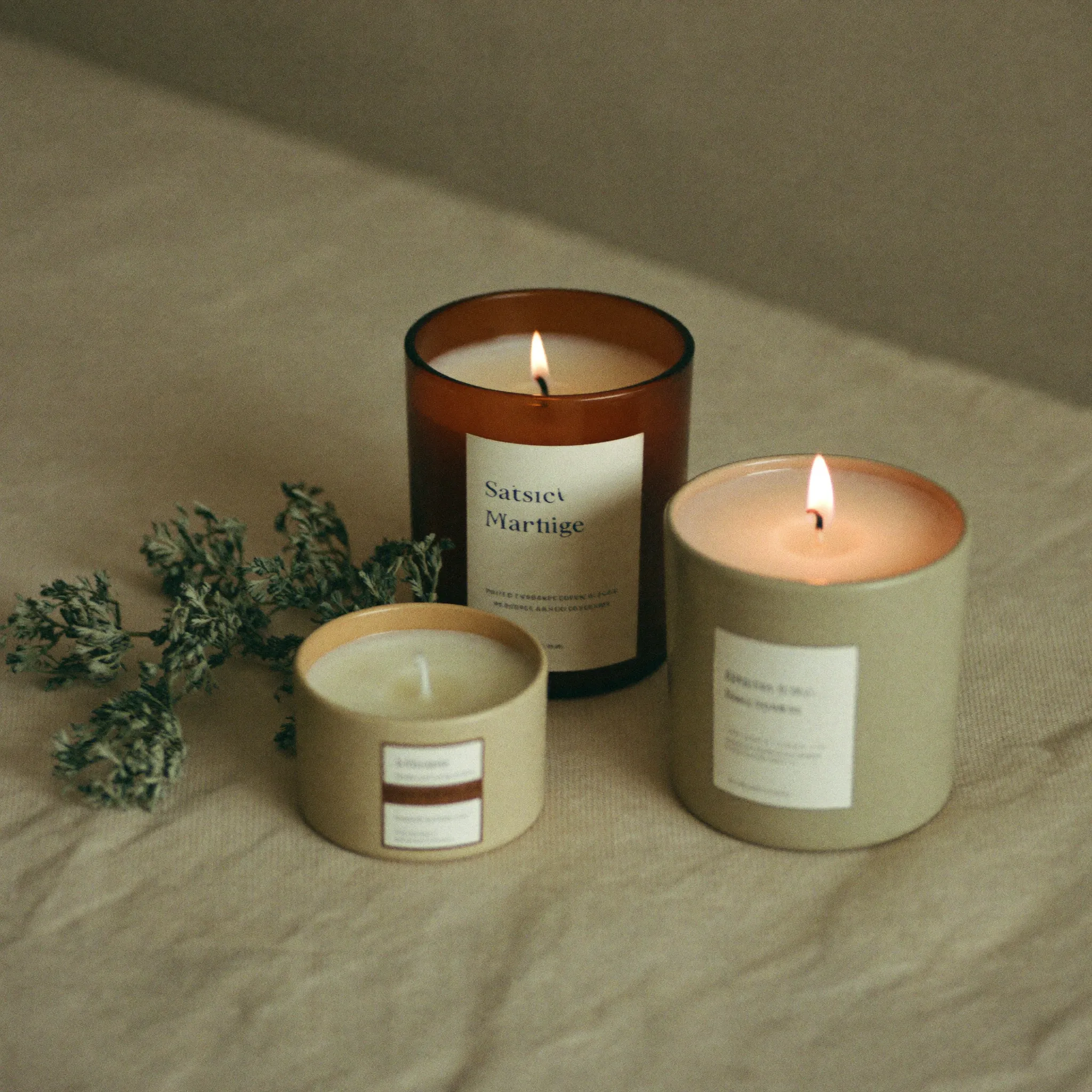
A lantern. I resisted this for years, because I wanted a real flame. Then I thought about an open candle on a wooden porch, a foot from a crock of bone-dry magnolia and a basket of papery hydrangea, and I bought the Barebones railroad lantern. It's steel, it recharges, and it throws a low gold light that makes the whole porch look lived-in from the road. The real flames live indoors now, where they belong, on the table with the candles we keep for the turn of the season.
After that I only add what was already in the house. The cotton throw off the couch goes over the porch rocker from October to March. The good mug comes out with it. An old splint basket from an antique barn in Asheville holds whatever the week handed me. If you want your porch to look like it has a history, the Directory's antique malls and markets, from Picker Joe's in Savannah to Gaslamp in Nashville, have more old crocks and baskets and lanterns than any of us has porch for.
What I Won't Buy
Here's the list, and I keep it short so I actually follow it.
Plastic pumpkins and foam gourds. A real squash costs about the same, looks better, and you can eat it.
Polyester leaves, garlands, and “wheat.” They fade in one season of sun and they never break down. Real oak leaves are free and just as colorful for a month.
Anything with glitter on it. It ends up in the flowerbed, then the garden, then the creek.
A porch full of new things every year. The fall aisle is designed so last year's porch looks tired. Mine is designed so last year's porch is this year's porch, give or take a squash.
My test for anything that wants a spot on the steps is simple: can it be eaten, composted, or kept for ten years? If not, it stays in the store.
The porch goes back to the garden
The best thing about a gathered porch is what happens to it after. In November the squash come inside to be roasted, pureed, and baked, and the seeds get toasted with salt. The branches go to the brush pile, where the wrens will be glad of them. The straw bale the pumpkins sat on gets pulled apart and spread over the new garlic, which is exactly what putting the garden to bed calls for. The hydrangeas come in to the kitchen table and stay there until spring.
What's left is a coir mat, a lantern, and a crock by the door, waiting for whatever the next season brings. Winter will be cedar and holly. Spring will be whatever blooms first. The Sowing Board will tell you when, and in the meantime you have a porch.
Blackbird Hollow is a slow-living magazine. Nothing here is medical or health advice — we write about atmosphere, craft, and living well, not treatment. Some links on this page are affiliate links; if you buy through them we may earn a small commission, at no cost to you. It never changes what we'd tell you.